 in Education
The Archery Exercise
Lets examine how a really interested student would pursue knowledge even if they’re interested in just a single topic.
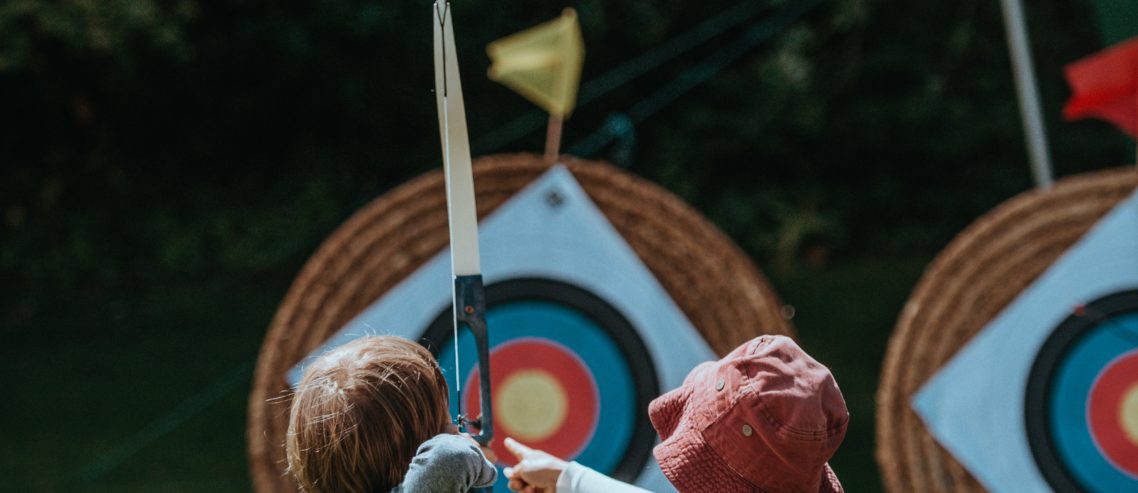
The question we are examing is, “If we let a student who is extremely interested in archery follow their passion, where would they end up?”
You can do this with any topic, but for some reason we discussed archery.
To make it easy, I’m choosing it, but I encourage you to actually use other subjects as well. The narrower the theme, usually the more interesting and challenging it will be.
The obvious answer became that if they’re good enough, they’d be a famous sportsperson who may even be an olympian. Go back a little while, and they’d probably be a hunter or a warrior.
The subsequent questions were equally obvious.
What if they’re fairly good, but not good enough to be a professional sportsperson? Would they be able to survive in this world? What would they do? Would they be able to feed themselves?
This of course led to examining how someone really interested in archery would be exposed to various topics. It was an interesting exercise, and despite my limited understanding and experience with the topic of archery, I could come up with:
- History, Geography and Culture – Did you know almost every culture has it’s own version of the bow and arrow. Whether it’s the metal bows of ancient India, the recurve bow of the Huns, the longbow of the British, the native bows of the pygmies of Africa, the aboriginal bows of the first nations people of Canada, the Japanese bow and so many others. Even the modern compound bow.
- Physics & Mathematics – The strength of a bow is measured in pounds. It’s the force it takes to pull the string. The actual line of travel of an arrow is not straight but follows a certain path of slight curvature.
- Literature, Culture, Ethics and Morality – Did you know that the bow and arrow are central to many stories whether it’s from Indian historical epics like the Mahabharata or Ramayana or interesting western stories like Robin Hood or William Tell.
- Biology, Chemistry and Environmental Sciences – The art of bow making requires recognition and selection of the right wood for it. Bows made from different woods have different characteristics. Arrow making and selection also vary quite a bit. The composition of the elements play a very important role.
- Physical Fitness and Wellness – Archery requires a certain level of physical fitness and the actions also inculcate activity. In fact, one of my friends took training from an elderly lady who used archery as a form of meditation.
If I sit and discuss with you, we can go on and on. However, if we get back to the topic of what someone immensely interested in something like archery can do for a living, then just based on the above I can see: sportsperson, hunting guide, instructor/coach, historical researcher, employment at archery equipment manufacturers or sales outlets, an author on any one ore more of the topics and so many more.
The point is thinking in topics that actually interest a student will invite them to go as deep as they want into the subject as compared to the restrictions we place by enforcing a pretty shallowly defined curriculum. What’s even worse is our treating everyone as the same, as if they’re a widget from a factory.
I strongly encourage you to do the same exercise with any other topic, or even with archery if you fancy it.

Comments
Comments are disabled for this post